1. Introduction
Energy is one of the most fundamental elements of the production process in the modern economy. In this respect, it is one of the fundamental components of the production function, along with labor and capital (Stern, 2003:3). Sudden fluctuations in energy supply negatively affect the economies of developed and developing countries in particular, causing pressure on energy costs as a result of this negative effect (Hamilton, 1981:228-229). This pressure causes price instability and leads to economic instability by creating direct and indirect effects on macroeconomic variables (Öksüzler and İpek, 2011:17). In addition, increased risk perception due to geopolitical tensions makes sudden fluctuations in energy supply even more fragile (Ceylan, 2024:776).

Sudden fluctuations in energy supply lead to increased production costs, which cause a decline in the competitive strength of countries that are energy importers in the industrial sector. The increase in energy inputs, which constitute a significant portion of production costs, causes firms’ marginal cost curves to shift upward (Pindyck & Rubinfeld, 2018:306). This situation leads to an increase in final product prices or a decrease in profit margins when companies cannot tolerate price increases. In such a scenario, companies’ competitive strength in the market is expected to decline (Porter, 1985:11). This situation also negatively affects the financial sustainability of companies.
Sudden fluctuations in energy supply affect macroeconomic variables as well as negatively impacting the economic performance of companies at the micro level. In countries with import-substituting production patterns, increases in energy prices lead to exchange rate pressures, deepening current account imbalances (Kilian et al., 2007:5). As mentioned earlier, rising energy costs increase production costs in the manufacturing process and, consequently, consumer prices for the final product. Such a situation leads to price instability and makes the economy more fragile (Yaylalı and Lebe, 2012:46). These developments render monetary and fiscal policies ineffective and lead to the postponement of investment decisions by increasing risks and uncertainties. On the other hand, the acceleration of energy transition processes on a global scale has highlighted the importance of structural transformation in the production process for industrial enterprises.
Today, cost reductions in renewable energy technologies, the proliferation of carbon pricing mechanisms, and sustainable financing criteria have transformed alternative energy investments from merely an environmental preference into a strategic and economic necessity. In this context, businesses have begun to evaluate their energy supply strategies not only from the perspective of cost minimization, but also through the lenses of risk management, financial stability, and corporate sustainability.
The rationality of alternative energy investments, when re-evaluated within the framework of classical investment theory, should be analyzed by considering production costs, cash flow projections, energy price expectations, risks, and uncertainties. In an economic climate where energy prices are trending upward and carbon regulations are tightening, the net present value of renewable energy investments is increasing; payback periods are shortening, and the risk hedging function is strengthening. This situation makes reducing energy dependence a rational choice not only environmentally but also economically. If we compare the costs of traditional and alternative energy investments, traditional energy production (coal, oil, etc.) may still be lower than alternative energy investments (solar, wind, etc.), despite incentives. Alternative energy costs may be falling due to additional costs and incentives such as border carbon taxes, as well as falling costs of inputs such as solar panels and wind turbines.
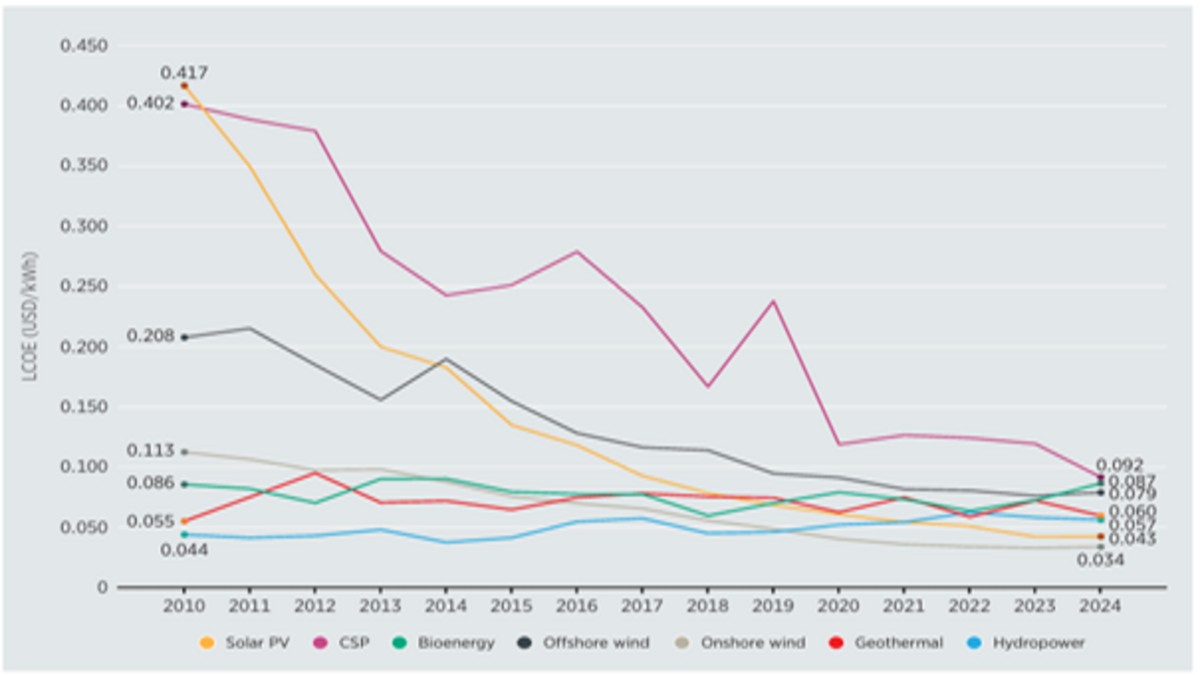
Figure 1.1. Renewable Energy Cost Trend (2010-2024)
Source: IRENA
Figure 1.1 shows that renewable energy technologies exhibited a clear downward trend in levelized cost of electricity (LCOE) between 2010 and 2024. The observed cost reduction, particularly in solar and wind energy, reflects the impact of technological progress, economies of scale, and supply chain maturation. This trend demonstrates that renewable energy investments have achieved increasing cost competitiveness over time.
The primary objective of this study is to analyze the effects of fluctuations in energy prices on the industrial sector. Within this scope, the aforementioned effects are examined based on financial sustainability. Furthermore, the economic fundamentals of alternative energy investments are evaluated in line with investment analysis and risk management approaches. Thus, the aim is to provide an analytical framework for how the energy transition process should be positioned in terms of industrial policies and corporate strategies.
2. Corporate Impacts of Energy Price Volatility on Businesses
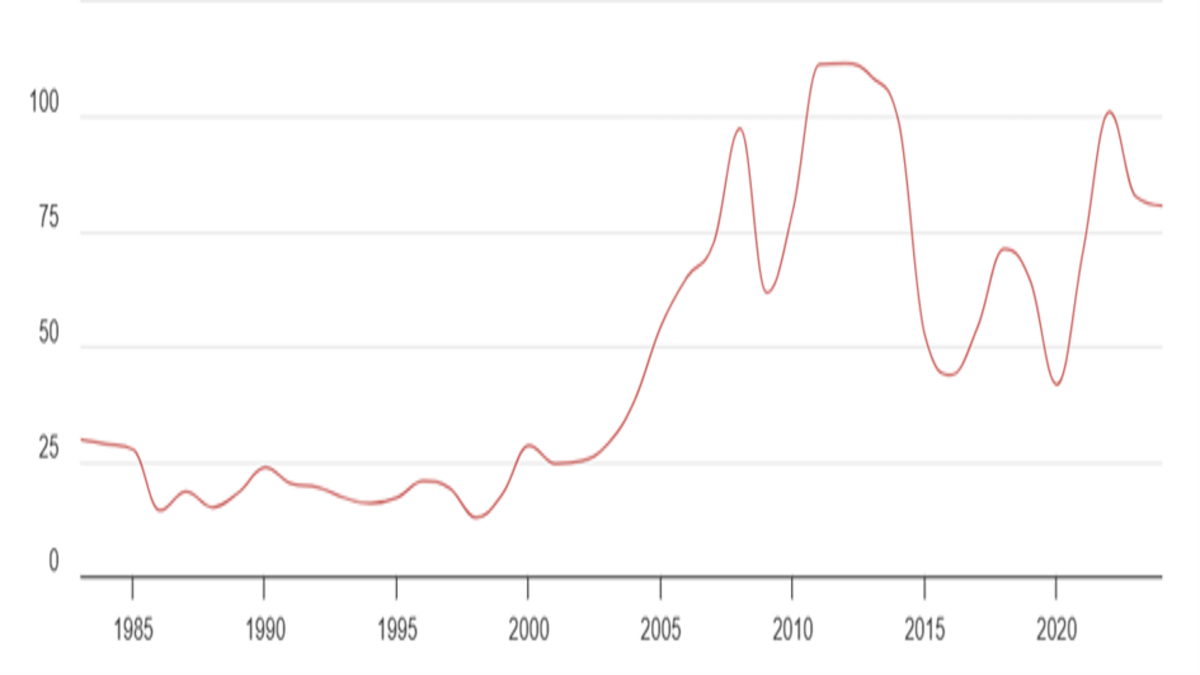
Fluctuations in energy prices not only create cost pressures for businesses; they also have multi-layered effects ranging from financial performance indicators to capital structure, cash flow management, and investment decisions. In Turkey specifically, extreme fluctuations in energy prices are significant as they represent a strategic risk factor for businesses operating in energy-intensive sectors. In this context, the effects of the pressure caused by the increase in energy costs on the corporate structure must be analyzed through the channels of Earnings Before Interest, Taxes, Depreciation, and Amortization (EBITDA/FAVÖK), cash flow, working capital, and financing costs. In this context, changes in Brent oil prices, which are the most important component of energy cost pressure, are shown in graphic 2.1.
Graph 2.1. Brent Crude Oil Prices (1985–2024)
Source: OPEC
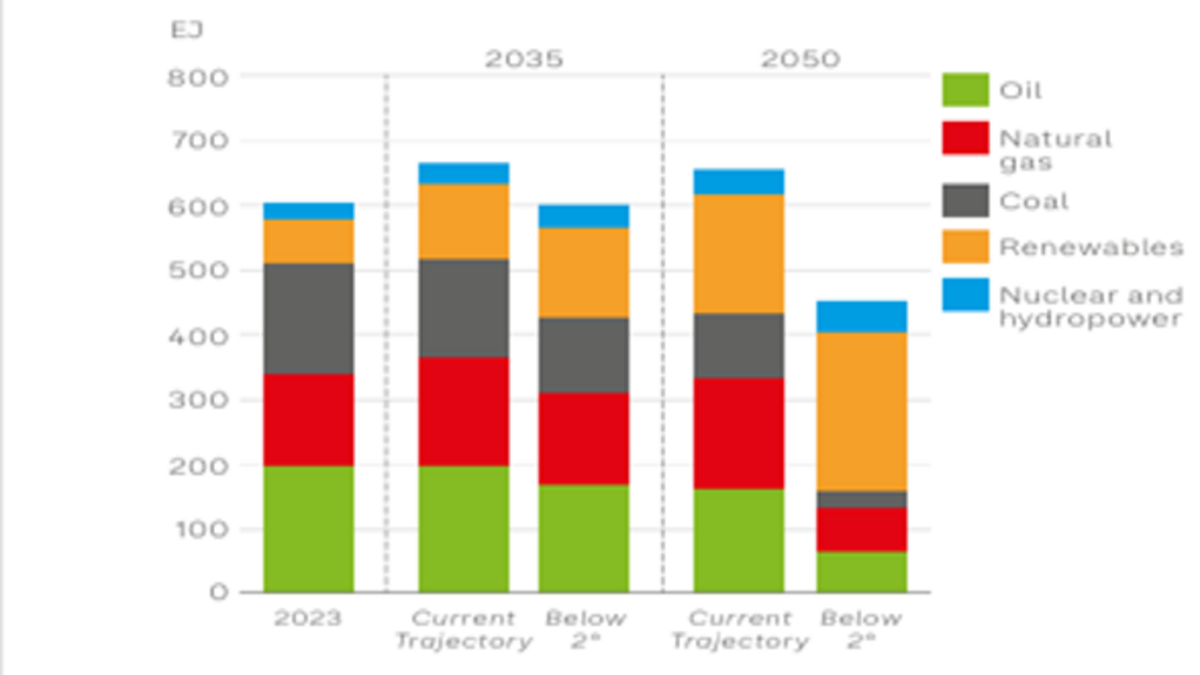
Figure 2.1. shows that Brent crude oil prices exhibited significant fluctuations during the period 1985–2024. Prices peaked particularly before the 2008 global crisis, declined sharply after 2014 due to oversupply and during the 2020 pandemic, and rose again in 2022 due to geopolitical developments. The findings reveal that oil prices are highly sensitive to the global economic climate and geopolitical risks. This volatility in oil prices and the uncertainties specific to fossil fuels can be considered one of the key factors accelerating the shift towards a more diversified energy system based on alternative sources. In this context, Figure 2.1 below shows the distribution of primary energy production by source and the structural transformation based on scenarios.
Figure 2.1. Energy Production by Primary Energy Type
Source: BP Energy Outlook
Figure 2.1 shows that in the current trend scenario, fossil fuels retain their importance, while the share of renewable energy is projected to increase steadily. In the below 2°C scenario, fossil fuels are projected to decline significantly, with renewable energy production becoming the main component.
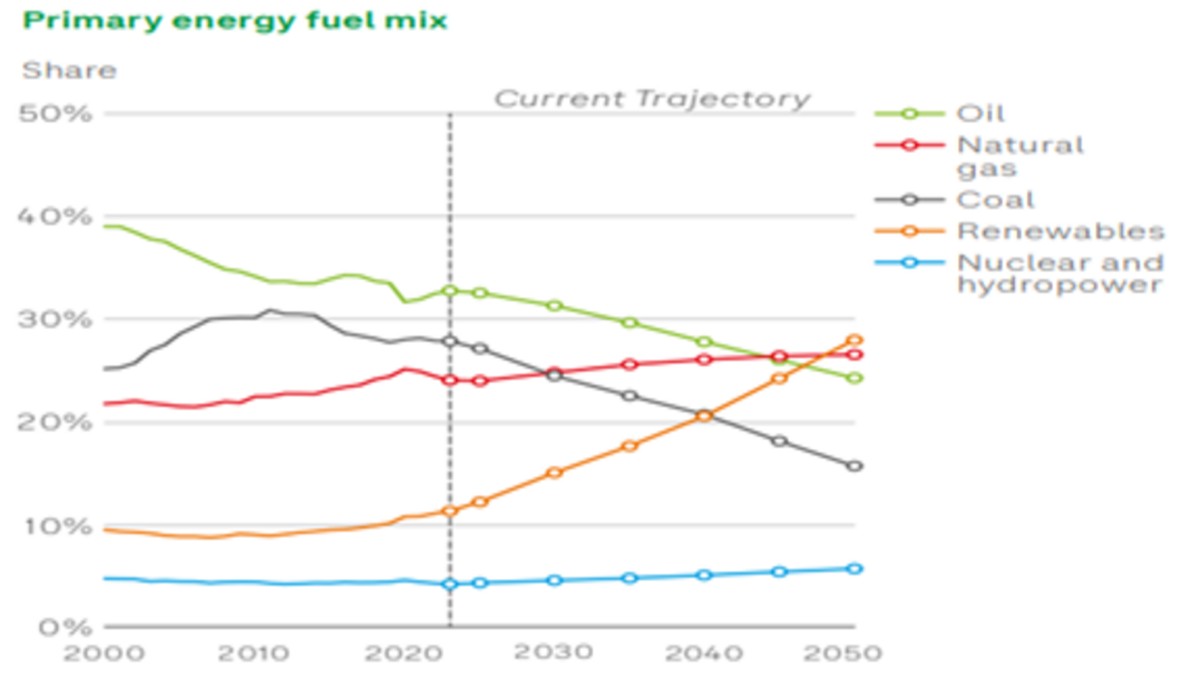
In order to analyze the resource-based share change of this structural transformation over the years in more detail, graphic 2.2 presents the projected share change of primary energy supply by source over time.
Graph 2.2 Share of Primary Energy Sources
Source: BP Energy Outlook
As shown in Figure 2.2, the share of fossil fuels has gradually decreased over the years, while the share of renewable energy has steadily increased. This trend points to a long-term structural transformation in the energy system.
Fluctuations in the production process primarily affect companies’ operational profitability (Pinkdyck and Rubinfeld, 2017:245/246). EBITDA, which represents a company’s earnings before interest, taxes, depreciation, and amortization, is one of the key indicators of operational performance (Grand and Parker, 2002:205). Increases in energy costs in production-intensive sectors lead to a direct increase in production costs. In a scenario where this increase is not reflected in sales prices, profit margins decline (Pinkdyck and Rubinfeld, 2017:245/246). Very low price pass-through in the short term directly leads to a decrease in EBITDA margin. This situation weakens the debt servicing capacity of businesses. Weakening debt capacity leads to increased risks. As a result, energy price volatility not only increases costs and raises company expenses, but also has an impact on company value.
Another effect of the increase in energy costs on companies is on cash flow. Increased price volatility in the production process at industrial enterprises causes uncertainty in cash flow projections. This situation complicates liquidity management for businesses. This negative situation in liquidity has an adverse effect on investment decisions and may lead to the postponement of investments.
Extreme volatility in energy prices and persistent price increases lead to an increase in businesses’ capital requirements. As a result of the increased capital requirement, the need for financing high inventories also increases. This process leads to increased payments and a greater need for current assets (Alipour, 2011:1093). In this context, if collection periods remain the same or extend, the pressure on net working capital increases further (Deloof, 2003:1093). In particular, the limited equity structure of small and medium-sized enterprises increases the need for short-term borrowing, which also puts additional pressure on profitability.
The impact of sudden fluctuations in energy prices varies depending on the structure and scale of the company (Aktan, 2003:3). Since the capital structure, production capacity, and market share of small and medium-sized companies are more limited than those of large companies, sudden changes in energy prices can lead to a faster decline in the profit margins of small and medium-sized companies. In contrast, large-scale companies can better protect themselves from potential financial risks because they can enter into long-term energy supply contracts and have more capital and stock power.
Generally speaking, sudden fluctuations in energy prices in modern economies create cost pressures for businesses and, as a result, have become a matter of corporate risk management and strategic planning. In this context, today’s businesses closely monitor changes in energy prices, conduct scenario-based cash flow analyses, increase energy efficiency investments, evaluate alternative energy projects as risk hedging mechanisms, and develop effective energy management strategies. Industrial businesses turning to rooftop solar power investments as a hedge against energy price volatility is an example of this. When approached on this basis, energy management can be said to be integrated with financial management and to be a key determinant of businesses’ long-term sustainability in particular.
3. The Impact of Energy Prices on Industry
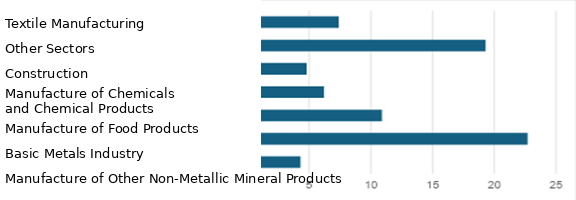
Energy prices have multidimensional effects on the industrial sector, both directly and indirectly. These effects are not limited to increases in production costs; they can also determine many components such as companies’ pricing strategies, investment decisions, capacity utilization rates, and sectoral competitiveness. In this context, it is important to examine the effects of energy prices at both the micro and macroeconomic levels in order to analyze them properly. In Turkey, the distribution of energy consumption in the production process across sectors is shown in Graph 3.1.
Graph 3.1. Distribution of Final Energy Consumption in Industry by Sector (%)
Source:TÜİK
Considering the impact of energy price shocks on the manufacturing sector, an important indicator is shown in Figure 3.1, which reveals that final energy consumption in the industrial sector reached 1,717,368 terajoules in 2024. When examining the sub-sectors, it is understood that the “manufacture of other non-metallic mineral products” sector accounts for the largest share of final energy consumption, at 28.8%. This is followed by the “basic metal industry” sector with 22.7%, the “manufacture of food products” sector with 10.9%, and the “manufacture of textile products” sector with 7.4%. The share of the “manufacture of chemicals and chemical products” sector in final energy consumption was 6.2%, while the share of the “construction” sector was 4.8%.
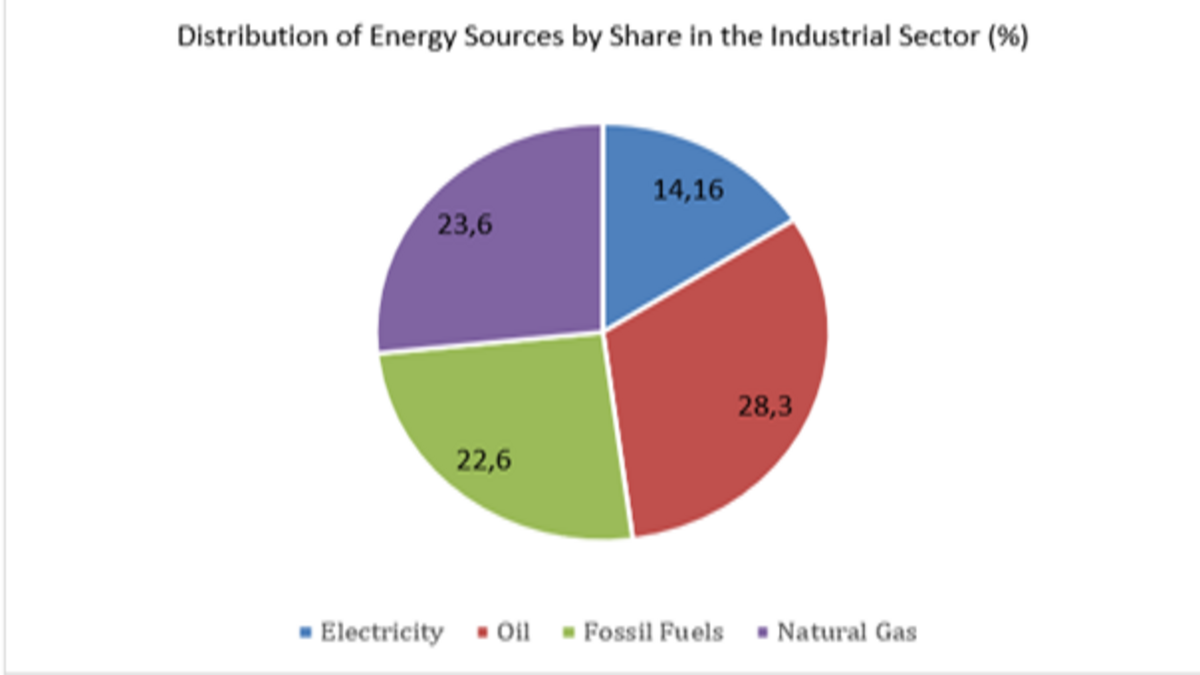
The distribution of energy usage sources in the manufacturing industry is shown in Graph 3.2.
Graph 3.2. Distribution of energy sources in the industrial sector by share (%)
Source: TÜİK
When examining Graph 3.2, it is understood that in the industrial sector, the most consumed energy sources in final energy consumption are electricity at 28.3%, natural gas at 23.6%, solid fossil fuels at 22.6%, and petroleum products at 14.0%.
3.1. Production Function and Cost Channel
Within the neoclassical production theory, energy is one of the fundamental inputs of the production function, alongside capital and labor. An expanded Cobb-Douglas production function can be expressed as follows:
(1)
In equation (1), E represents the energy input. An increase in energy prices raises the unit cost of the energy input, thereby increasing total production costs (Griffin and Gregory, 1976: 845). Particularly in energy-intensive sectors, a high γ coefficient causes energy price shocks to have a stronger impact on production (Finn, 2000:405/406).
The impact of rising energy prices on companies manifests in two ways: One is an increase in marginal costs. Particularly in the short term, cost increases resulting from sudden fluctuations in energy prices lead to higher marginal costs, as the substitution effect is limited during this period. Another effect is price pass-through: Rising energy prices cause inflationary pressures on the general level of cost-driven prices. In this case, if companies do not reflect price increases, their profit margins will decrease.
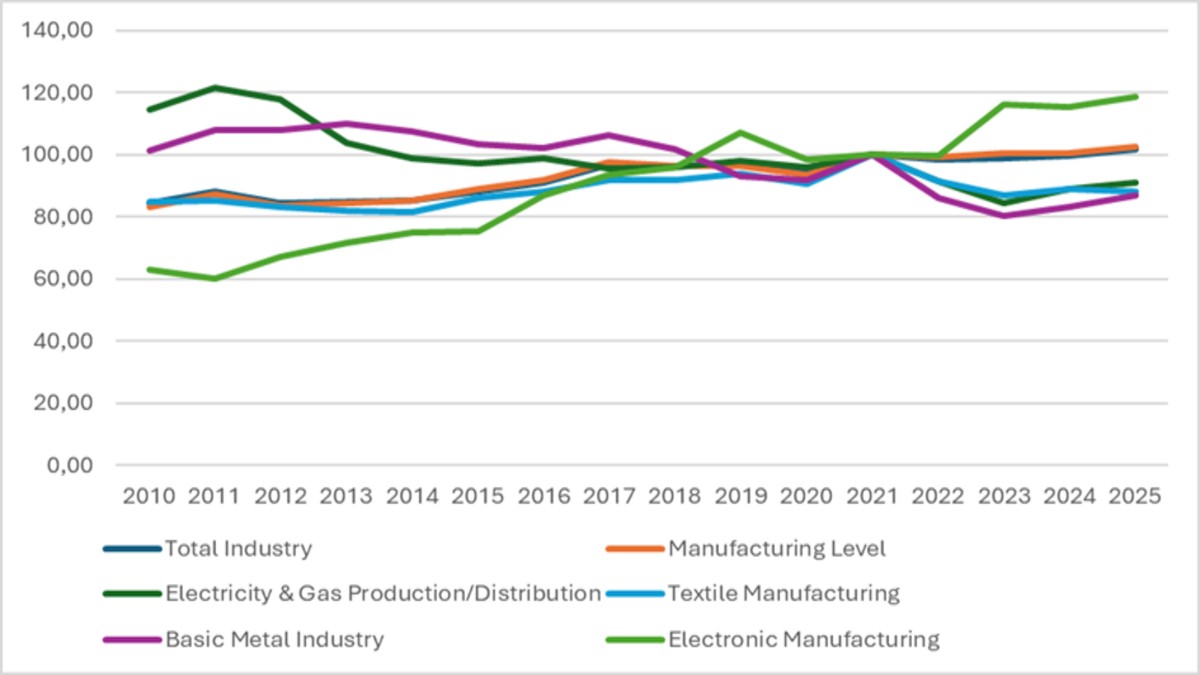
Figure 3.3 shows the levels of change in total industry and specific sub-sectors in Turkey between 2010 and 2025. Graph 3.3 is important in that it reveals how the observed output of the production function evolved at the sectoral level.
Graph 3.3 Türkiye Industry and Sub-Sector Production Indices
Source: TCMB EVDS
When examining Graph 3.3, while total industry and manufacturing industry generally show a parallel and moderate upward trend, the fluctuating but ultimately rising trend in electricity and natural gas production supports the importance of energy inputs on production. Periodic declines in the primary metal industry indicate the sensitivity of capital-intensive sectors to cyclical and cost-related pressures, while the acceleration in electronics manufacturing points to sectoral productivity differentiation. This differentiation shows that changes in total factor productivity and input composition in the production function create heterogeneous effects on sectoral outputs.
3.2. Energy Intensity and Sectoral Differentiation
The pricing effect caused by sudden fluctuations in energy prices is not the same across sectors (Lee and Ni, 2002:1). In sectors with high energy intensity in the production process, such as iron and steel, aluminum, cement, chemical, and glass industries, energy costs are higher than in labor-intensive production sectors. Therefore, price increases in energy-intensive sectors directly lead to a decrease in competitiveness.
On the other hand, the impact of sudden changes in energy costs is relatively less in labor-intensive and technology-intensive sectors. Considering the cost structure in these sectors, where added value is generally generated through human capital and R&D activities, fluctuations in energy prices have a more limited impact compared to industrial production.
3.3. Competitiveness and International Trade
The impact of energy price fluctuations on national economies is directly related to the level of development of those countries (Bedir, 2012:179). For example, the negative impact of a price fluctuation on the economy of a country with an import-substituting production structure may be higher than on the economies of other countries. This situation can lead to a negative impact on the international competitive strength of the industrial sector in energy-importing countries. This effect is due to the pressure on foreign exchange reserves resulting from increased costs associated with rising energy prices in the production process, which in turn creates a negative impact on the current account balance and ultimately leads to a decline in the value of the local currency (Taşçı, 2025:659).
Therefore, companies operating in economies with high energy costs face difficulties in price-based competition compared to economies with lower energy costs. In such an economic climate, costs increase, export performance declines, and production shifts to lower-cost countries. In addition, border carbon adjustments implemented in regions such as the European Union create additional cost pressures for energy-intensive manufacturers. In this context, energy prices and carbon costs should be considered together.
3.4. Inflation and Macroeconomic Implications
Sudden fluctuations in energy prices can directly and multidimensionally affect macroeconomic balances, particularly through the supply-side inflation mechanism. These fluctuations cause an increase in the general price level through cost increases, a decrease in consumers’ real income, and a decline in investment appetite due to increased risk and uncertainty. (Yaylalı and Lebe, 2012:80).
In this context, energy price fluctuations play a key role in determining monetary and fiscal policies and a decisive role in determining industrial policies.
3.5. Financial Performance and Investment Behavior
Energy price volatility leads to increased risk and uncertainty, causing investments to be postponed (Bloom:2009, 2). Postponing investments makes it difficult for companies to project cash flows. In a climate of increased risk and uncertainty, rising energy costs increase working capital requirements, raise borrowing needs, and reduce profitability ratios. This situation can increase financial fragility, particularly among SMEs.
3.6. Long-Term Structural Effects
Persistent increases in energy prices not only affect costs in the short term but also influence companies’ long-term structural transformation decisions (Aghion et al.: 2016:2). The persistence of energy price increases reshapes companies’ investment decisions and reevaluates their role in the production function. In this context, energy is no longer a passive cost element in modern economies but has become a strategic production factor.
In a context where price increases are becoming persistent and taking on a permanent structure, companies are expected to adopt policies that reduce costs and focus on structural transformation (Aghion et al.: 2016: 2/3). In such a context, policies that increase energy efficiency and reduce costs are of paramount importance. Since the primary goal of companies is to achieve the same output level at a lower cost, developing optimization projects plays a critical role in this process. This role contributes to reducing energy consumption per unit of production and making the cost structure more sustainable. Another important step for companies in the face of long-term price increases is the acceleration of digitalization and automation processes (Acemoglu and Restrepo, 2018: 3/5). In order to track and control energy costs more clearly and accurately, Industry 4.0 applications.
In addition, renewable energy investments are becoming a strategic choice for companies. Applications such as solar energy systems, cogeneration plants, and energy storage solutions aimed at reducing companies’ energy dependence have become widespread recently. In the long term, these investments not only allow companies to avoid cost pressures but also help stabilize costs against price fluctuations. Predictable costs in the long term help reduce risks and uncertainties, enabling companies to make healthier and more planned investment decisions. Furthermore, persistent increases in energy prices may reduce companies’ profitability, leading to a shift in investments towards less energy-intensive sectors (Gökmenoğlu et al. 2012:9). This situation may lead to a change in the overall production structure across the entire sector (Öksüzler and İpek, 2011:18).
Generally, persistent increases in energy prices lead to increased price stickiness and cost pressure. Companies wishing to protect themselves from these negative effects are developing policies aimed at technological transformation, increased efficiency, and structural modernization, and are making investment decisions in line with these policies. In this respect, although persistent increases in energy prices are seen as a risk factor for companies, they also bring with them transformation opportunities that will increase their competitiveness in the long term. The long-term competitive advantage can be achieved by companies that manage energy efficiency, digitalization, and renewable energy integration at a strategic level (Karaaslan and Tuncer, 2010:30).
Conclusion
This study examines the effects of energy price fluctuations on the industrial sector at the macroeconomic level, details them from a cost perspective, investigates their impact on investment behavior, and evaluates them within the framework of risk management.
When the theoretical and empirical results are evaluated together, it is seen that energy price changes create multi-layered and asymmetric effects on the industrial sector. The increase in energy costs leads to a decrease in profit margins by raising marginal costs, especially in energy-intensive sectors. The effects of this situation differ in the short and long term. In the short term, it can lead to a slowdown and contraction in production, and a decrease in capacity utilization rates in production. In the long term, increased cost pressure as a result of increased risk and uncertainty can cause firms to postpone their investment plans and increase financial fragility.
At the macroeconomic level, energy price shocks negatively affect price stability through the supply-side inflation channel; in import-substituting economies and those highly dependent on energy imports, they increase the current account deficit, put pressure on the exchange rate, and cause the domestic currency to depreciate. Based on this, it can be concluded that energy prices are not only a sectoral cost element but also a structural variable affecting the effectiveness of monetary and fiscal policies.
In energy-intensive sectors, it can be stated that increases in energy prices put significant pressure on competitiveness. The widespread adoption of carbon regulations and the implementation of border carbon mechanisms globally are transforming energy costs into not only an economic but also a regulatory risk factor. This situation makes energy transition a strategic necessity for industrial enterprises.

In this context, alternative energy investments stand out as a powerful tool not only in terms of environmental sustainability but also in terms of economic rationality. Rising energy prices and price volatility increase the net present value of renewable energy investments and shorten the payback period. Rooftop solar power plant investments and energy efficiency projects, especially in industrial facilities, provide a natural hedging mechanism for companies by stabilizing their energy costs. At the same time, these investments, which reduce carbon footprints, create a competitive advantage for businesses in international markets (Karaaslan and Tuncer, 2010:37).
Consequently, energy prices have gone beyond being merely one of the fundamental factors determining the cost structure of the industrial sector; they have become a structural determinant of competitiveness, investment behavior, and macroeconomic stability. In economies with high energy import dependency, such as Turkey, the energy transition process is not only an environmental choice but also a necessary policy area in terms of economic sustainability and strategic independence. Within this framework, alternative energy investments should be considered as a rational investment strategy that provides cost minimization, risk management, and long-term competitive advantage.
Source
- Acemoglu, D., & Restrepo, P. (2018). Artificial intelligence, automation, and work (NBER Working Paper No. 24196). National Bureau of Economic Research.
- Aghion, P. et al. (2016). Carbon taxes, path dependency and directed technical change. Journal of Political Economy.
- Aktan, C. C. (2011). Global rekabet gücü ve işletmeler. Mercek Dergisi, Ocak 2011.
- Bedir, A. (2012). Diyarbakır ilinde kadın istihdamı ve ekonomik sorunlar [Article]. Gazi Üniversitesi İktisadi ve İdari Bilimler Fakültesi Dergisi, 14(1), 171–212.
- Bloom, N. (2009). The impact of uncertainty shocks. Econometrica
- Ceylan, F. (2024). Jeopolitik risklerin küresel enerji ve gıda fiyatları üzerinde zamanla değişen etkileri. Eskişehir Osmangazi Üniversitesi Sosyal Bilimler Dergisi, 3(Kasım), 775–791
- Deloof, M. (2003). Does working capital management affect profitability of Belgian firms? Journal of Business Finance & Accounting, 30(3–4), 573–588.
- Finn, M. G. (2000). Perfect competition and the effects of energy price increases. Journal of Money, Credit and Banking.
- Griffin, J. M., & Gregory, P. R. (1976). An intercountry translog model of energy substitution responses. American Economic Review.
- Grant, J., & Parker, L. (2002). EBITDA! Research in Accounting Regulation, 15, 205–212. Elsevier.
- Gökmenoğlu, S. M., Akal, M., & Altunışık, R. (2012). Ulusal rekabet gücünü belirleyen faktörler üzerine değerlendirmeler (A review on factors determining national competitiveness). Rekabet Dergisi, 13(4), 3–43.
- Hamilton (1983) – Oil and the Macroeconomy
- Karaaslan, A. & Tuncer, G. (t.y.). Uluslararası rekabet gücünün artırılmasında temel devlet politikaları. Akademik İncelemeler Dergisi. Erişim adresi
- Kilian, L., Rebucci, A., & Spatafora, N. (2007). Oil shocks and external balances (IMF Working Paper No. WP/07/110). International Monetary Fund.
- Lee, K., & Ni, S. (2002). On the dynamic effects of oil price shocks: A study using industry level data. Journal of Monetary Economics, 49(4), 823–852
- Öksüzler, O., & İpek, E. (2011). Dünya petrol fiyatlarındaki değişimin büyüme ve enflasyon üzerindeki etkisi: Türkiye örneği. ZKÜ Sosyal Bilimler Dergisi / ZKU Journal of Social Sciences, 7(14), 15–34
- Pindyck, R. S., & Rubinfeld, D. L. (2018). Microeconomics.
- Porter, M. E. (1985). Competitive advantage: Creating and sustaining superior performance. New York, NY: Free Press.
- Stern, D. I. (2011). The role of energy in economic growth. Annals of the New York Academy of Sciences, 1219(1), 26–51.
- Taşcı, H. (2025). Türkiye’de enerji fiyatı, volatilite ve makroekonomik göstergelerin dış ticaret üzerindeki dinamik etkileri: Fourier analizi ve Rolling Granger yaklaşımı (1990-2024). İnönü Üniversitesi Uluslararası Sosyal Bilimler Dergisi (INIJOSS), 14(2), 658–685.
- Türkiye İsratistik Kurumu (2026) https://veriportali.tuik.gov.tr/tr/press/54137
- Yaylalı, M., & Lebe, F. (2012). Effects of import crude oil prices on macroeconomic activities in Turkey. Marmara Üniversitesi İktisadi ve İdari Bilimler Fakültesi Dergisi, 32(1), 43–68.