Warehouses and storage facilities are more than just “waiting areas” in the supply chain. Today, these structures have become the most critical nerve centers for companies in terms of inventory accuracy, order performance, customer satisfaction, ESG (Environmental, Social, and Governance) compliance, expiration date tracking, and financial sustainability.
Warehouse risks often begin with seemingly minor oversights. Ignoring a sensor alert or a small discrepancy in data entry can trigger a chain reaction leading to multi-million dollar inventory discrepancies, hefty customs penalties, or irreparable workplace accidents.
 Overview of the Warehousing Industry
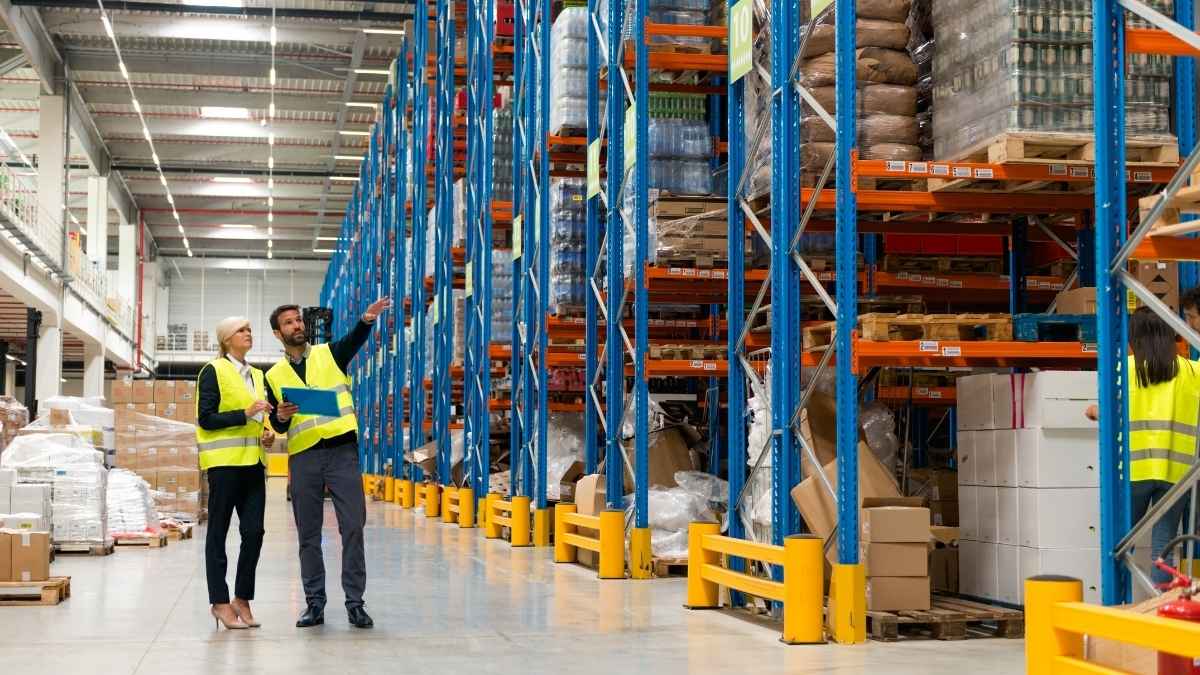
The cost of weaknesses in warehouse management is measured in billions of dollars every year. Data clearly reveals the devastating impact of “invisible losses” on company profitability. The logistics sector is expected to experience a steady expansion process with a compound annual growth rate of 6.4% between 2023 and 2032. Its market value is projected to reach US$15.9 trillion by 2032, up from US$9.4 trillion in 2023. (Source: https://www.utikad.org.tr/images/HizmetRapor/utikadlojistiksektoruraporu2024-9911.pdf)
Global Overview
- Inventory Losses: According to the National Retail Federation (NRF) 2025 industry projections and end-of-2024 report data, the cost of inventory reduction in the global retail and logistics network has exceeded $130 billion annually. The Impact of Theft & Violence 2025 report, published by the National Retail Federation (NRF) and the Loss Prevention Research Council (LPRC), reveals an 18% annual increase in theft incidents. (Source: https://nrf.com/media-center/press-releases/new-study-finds-retailers-continue-to-contend-with-rising-levels-of-theft-and-violence]”
- Workplace Accidents: Data from the Occupational Safety and Health Administration (OSHA) shows that 5 out of every 100 warehouse workers experience a workplace accident each year. Forklift accidents are at the top of these statistics. (Source: https://www.osha.gov/warehousing/hazards-solutions)
- Automation Risk: While the use of robotic systems in warehouses has increased by 40% in the last 3 years, fire and cyber risks stemming from these systems have increased in parallel. DHL’s Logistics Trend Radar reports predict that robotic systems will play a primary or supporting role in more than 40% of warehouses. DHL Thought Leadership articles contain serious warnings about the fire risk posed by lithium-ion battery-powered robots and the expansion of the cyberattack surface of networked systems as the pace of automation accelerates. (Source: https://www.dhl.com/discover/en-global/news-and-insights/reports-and-press-releases/logistics-trend-radar-2024)
- Logistics Performance: The World Bank’s Logistics Performance Index (LPI) emphasizes that warehousing efficiency directly impacts national competitiveness. (Source: https://lpi.worldbank.org/)
Türkiye Overview
- Warehouse Volume: As of March 2026, there are 1,426 warehouses in Türkiye. According to data from the Ministry of Trade, penalties for non-compliance with regulations detected during customs inspections can reach 3% to 5% of total operational costs. (Source: https://ticaret.gov.tr/istatistikler)
- Logistics Growth: UTİKAD (International Association of Transport and Logistics Service Providers) reports show that due to Türkiye’s geographical location, warehouse capacity is growing at an average rate of 8-10% annually, but digitalization and risk management practices have not yet fully kept pace with this rate. (Source: https://www.utikad.org.tr/images/HizmetRapor/utikadlojistiksektoruraporu2024-9911.pdf)
The World Bank’s 2023 Logistics Performance Index, which compares 139 countries, shows that Türkiye, which was ranked 47th in 2018, rose to 38th place in 2023 with a score of 3.4 points; this indicates that logistics infrastructure, process quality, and speed have now become direct competitive factors. (Source: https://lpi.worldbank.org/international/global)
Turkish Warehouse and Storage Sector
| Warehouse Type | Number | Risk Focus Point |
| General Warehouse | 746 | Regulatory Compliance and Cross-Reconciliation |
| Private Warehouse | 680 | Stock Accuracy and Physical Security |
| TOTAL | 1.426 | Integrated Risk Management |
The Ministry of Trade’s data from March 2026 proves Türkiye’s rapid progress toward becoming a regional logistics hub:
In Türkiye, warehouses are now leased not only based on square meters but also on “technological capacity.” Investments in green warehouses (LEED – Leadership in Energy and Environmental Design certified) and solar-powered warehouses bring with them a new area of risk: “electrical fire risks.” (Source: https://www.utikad.org.tr/images/HizmetRapor/utikadlojistiksektoruraporu2024-9911.pdf)
Why Does the Difference Between a Warehouse and a Bonded Warehouse Change Risk Management?
A warehouse is an operational area where goods in free circulation and with completed tax procedures are stored. Speed, stock accuracy, and order flow are paramount here. A bonded warehouse, on the other hand, is a special structure where goods under customs supervision, whose taxes have not yet been finalized or have been deferred, are held; here, record integrity, declaration accuracy, physical supervision, and regulatory compliance become more critical. In Türkiye, bonded warehouse types are officially divided into general and private bonded warehouses; furthermore, the Customs Regulation and ministry practices impose clear responsibilities on bonded warehouse operators and users regarding the protection of goods and the accurate maintenance of records.
This difference is crucial from a risk management perspective. While errors made in the warehouse often produce operational and financial consequences, errors in the bonded warehouse can additionally create customs, tax, and legal permit risks. Therefore, the bonded warehouse control architecture should be more tightly established.
When designing risk management, the legal status of the warehouse determines the depth of control:
Risk in the Warehouse: The focus is on speed and efficiency. An error here leads to customer loss and operational costs.
Risk in the Bonded Warehouse: The focus is on legal compliance. An error here (such as discrepancies in declarations or missing goods) can directly result in imprisonment, heavy fines, and revocation of the operating license. According to the Customs Law No. 4458, the bonded warehouse operator is jointly and severally liable for the non-alteration of goods while under customs supervision. (Source: https://www.mevzuat.gov.tr/mevzuat?MevzuatNo=4458&MevzuatTur=1&MevzuatTertip=5)
Choosing a Reliable Warehouse
Warehouse risk management is not limited to controlling existing operations; choosing the right warehouse is a critical part of this process. Businesses should not focus solely on price, location, or capacity when selecting a warehouse. A reliable warehouse should have a strong physical security infrastructure, regular record-keeping discipline, an operations team familiar with customs regulations, high traceability capabilities, and a management open to audit. Elements such as camera systems, entry-exit control mechanisms, fire safety, rack and equipment maintenance, digital record infrastructure, and personnel authorization matrix must be considered during the selection process. In addition, the warehouse’s past audit performance, history of penalties or irregularities, insurance coverage, and how it acts in times of crisis should also be among the evaluation criteria. Choosing the wrong warehouse not only reduces the logistics efficiency of the business but also increases customs, security, damage, and reputational risks.
Financial and Operational Aspects of Risks
Globally, inventory loss remains a significant profitability issue. Studies by the National Retail Federation (NRF) show that retail-related inventory loss reaches approximately 1.6% of sales. While this data cannot be directly applied to all warehouse types, it clearly demonstrates the impact of inventory loss on the balance sheet. (Source: https://dergipark.org.tr/en/pub/pajes/article/668152)
In terms of occupational safety, OSHA highlights musculoskeletal strains and the risk of forklift and other material handling equipment collisions as among the most common injuries in warehouses. OSHA’s forklift publications indicate that approximately 100 deaths and 95,000 injuries are forklift-related each year. This clearly demonstrates why forklift safety in warehouse environments should be treated as a separate discipline. (Source:https://www.osha.gov/warehousing, https://www.osha.gov/warehousing/hazards-solution)
The scale is also considerable in Türkiye. According to the Ministry of Trade’s data as of the end of March 2026, there are 1,426 bonded warehouses in the country. Of these, 746 are general bonded warehouses and 680 are in the special bonded warehouse category. The same table also shows that there are different physical infrastructure needs for cold storage, chemicals, flammable goods, textiles, and various special product groups.
Number of Bonded Warehouses in Türkiye by Type
| Specialty Item Type | Number of Warehouses |
| Food | 298 |
| Fuel | 67 |
| Flammable | 108 |
| Textile | 205 |
| Cold Storage | 97 |
| Chemical | 231 |
(Source: https://ticaret.gov.tr/data/62138a6a13b87612080b4e46/ANTREPO%20SAYILARI.pdf)
In UTİKAD’s 2024 logistics sector report, which addresses geopolitical risks, climate impacts, supply chain fragility, and digital transformation, warehouses and storage facilities are described not only as storage areas but also as nodal points affecting the continuity of the entire logistics ecosystem. Another noteworthy point in the same report is the developments in digital logistics. The global digital logistics market, estimated at US$35 billion in 2024, is expected to reach US$151 billion by 2032 with an average compound annual growth rate of 20%. (Source: https://www.utikad.org.tr/images/HizmetRapor/utikadlojistiksektoruraporu2024-9911.pdf)
Main Types of Risks Encountered in Warehouses and Storage Facilities
Warehouse and storage facility management is not just about managing a physical space, but also about managing uncertainty. These facilities are strategic operational centers representing raw material security for manufacturers, the capacity to collect and organize different loads and products in one place for logistics companies, and delivery speed for e-commerce companies.
A disruption in a warehouse operation does not remain confined to the boundaries of that building. In “Just-in-Time” production models, a warehouse shutdown means the factory shutdown. In the e-commerce world, mismanagement of a warehouse means customer loss and reputational damage that spreads rapidly through social media. If we consider the warehouse as the heart of the supply chain, a “blockage” here triggers a domino effect throughout the system, leading to a financial crisis.
Operational Risks
Operasyonel Operational risks stem from faulty process design or implementation weaknesses. Small errors, often considered “negligible,” can turn into enormous costs when volume increases.
Incorrect Calculation Errors
Shipping the wrong product increases reverse logistics (return) costs. Errors occurring in manual calculating processes can be significantly reduced with Warehouse Management System integration.
Cross-Shipment Confusion
In this process, where products are directed directly from storage to shipment, if labeling and barcode scanning discipline is weak, goods are sent to the wrong places. This means not only a loss of transportation costs but also exceeding critical delivery times.
Equipment Shortages and Failures
Failure to include equipment such as forklifts, conveyor belts, or handheld terminals in the “Predictive Maintenance” program leads to unplanned downtime during peak operational hours. Equipment-related downtime directly reduces warehouse productivity by 15% to 20%. (Source: https://www.mhi.org/annual-industry-reports)
Addressing and Location Vulnerabilities
Incorrectly addressed products are treated as “lost goods.” Every unit of stock that is physically present but not visible in the system is idle capital for the company.
Process Risks Specifically in Warehouses
The nature of risk changes in warehouses. In these areas subject to customs control:
- Record Integrity: Instantaneous reconciliation of the physical goods with the system record (including customs declaration) is required.
- Unauthorized Interference: Movements of goods outside the supervision of customs officers create legal risks that can lead to smuggling charges under the “Customs Law.”
Risks and Management of Inventory Accuracy
Inventory accuracy is like an X-ray of a warehouse. Any rate below 99% is a hidden cost leak.
- Incorrect Receipt and Dispatch Transactions: A single unit error during the goods receiving stage disrupts the entire shipping chain. “Blind Counting” (counting without seeing the delivery receipt) is the most critical control point in this sense.
- Incorrect Addressing: The fact that a product is physically in the warehouse but not in the system leads to order cancellations and customer loss.
- Counting Discrepancies and Inventory Inconsistencies: Instead of general counts conducted once a year, the “Cyclical Counting” method should be applied. With this method, a section of the warehouse is counted every day, and errors are detected immediately.
Sensitive Product Group Management
Cold Chain and Environmental Monitoring: In the food and pharmaceutical industries, temperature fluctuations mean product spoilage. Humidity and temperature should be monitored 24/7 using Internet of Things (IoT) based sensors, and automatic alarm systems should be activated when threshold values are exceeded.
High-Value Products and Theft: Products such as electronics, luxury goods, and jewelry should be stored in restricted areas called “cages,” accessible only with two signatures/approvals.
Financial Risks
Financial risks in warehouse and storage operations don’t just mean direct cash loss; they also erode a company’s working capital, affect its credit rating, and undermine investor confidence. A warehouse’s financial health depends on the balance between the rate at which inventory is converted to cash and the rate of loss.
Inventory Losses and Shrinkage Impact
Inventory shrinkage, also known as “stock gap,” is the biggest financial leak in warehouse management. The Impact of Theft & Violence 2025 report published by the NRF shows that global retail and logistics losses exceed $130 billion annually. It is emphasized that these losses are not only due to theft, but more than 30% are due to operational errors and systemic vulnerabilities. (Source:: NRF – Impact of Retail Theft 2025)
Idle Stock, Expiration Date and Product Spoilage Risks
In warehouses with poor expiration date (EXP) management, falling into the Last-In, First-Out (LIFO) error leads to products dying on the shelves.
- Destruction Costs: Especially in the food, pharmaceutical, and cosmetics sectors, the destruction of expired products brings not only the cost of the goods but also destruction costs in compliance with logistics and environmental regulations.
- Damage Risk: “Scrap” products resulting from incorrect stacking and forklift collisions necessitate the allocation of an inventory loss provision on the balance sheet, which directly reduces the EBITDA figure.
Financial Risks Arising from Warehousing and Customs Legislation
The extent of financial risk in warehouses can far exceed the value of the goods.
- Heavy Fines: According to the Customs Law, fines can be imposed for shortages or surpluses in warehouses, in amounts that are multiples of the customs value of the goods.
- Tax Burden: Incorrectly declared product codes (GTIP) result in retroactive additional tax assessments and late payment interest.
Insurance and Undervaluation Risk
Many businesses insure the value of their warehouse inventory at an approximate or average figure. However;
- Underinsurance: In the event of fire, flood, or theft, if the actual inventory value is higher than the amount stated in the policy, it leads to a disproportionately short payment of damage compensation.
- Exceptions: Policy clauses such as “gross negligence” or “inadequate security measures” may cause the insurance company to not pay the full amount of the damage or to refuse to pay at all.
Physical Safety and Occupational Health and Safety (OHS) Risks
Warehouses are among the workplaces with the highest risk of industrial accidents. Unfortunately, the “Transportation and Storage” sector in Türkiye consistently ranks high in occupational accident statistics every year. These risks directly threaten not only employee health but also operational continuity and company assets.
Warehouse Accidents
Warehouse operations are one of the areas with the highest frequency of occupational accidents in Türkiye due to dynamic vehicle traffic and high stacking activities. Current data published by the Turkish Social Security Institution (SGK) confirms that the “Storage and Support Activities” (NACE Code: 52) sector is among the top 5 sectors with the most accidents. (Source: https://guvenliinsaat.csgb.gov.tr/haberler/2024-yili-sgk-is-kazasi-istatistikleri-yayinlandi/)
Analysis of field inspections and SGK (Social Security Institution) accident notification forms reveals that the main causes of injuries in warehouses are as follows:
- Equipment Collision: Particularly forklift and pedestrian interaction.
- Falls from Height: Using ladders or picking up products from unsuitable platforms.
- Stack Overturning and Material Falling: Products falling on employees as a result of faulty palletizing or shelf damage.
Periodic Inspection of Racking Systems
In Türkiye, the most neglected area, yet one carrying the greatest risk of “mass loss,” is the periodic inspection of racking systems. Although racks appear to be static structures bearing thousands of tons of load, forklift impacts and incorrect loading cause structural damage over time.
- Legal Regulations: According to the “Regulation on Health and Safety Conditions in the Use of Work Equipment” (Annex III, Article 3.2. Industrial Racks), these systems must be inspected by expert personnel at least once a year.
- Technical Standard: Inspections must be carried out according to the TS EN 15635 (Steel storage systems – Application and maintenance of storage equipment) standard. (Source: https://resmigazete.gov.tr/eskiler/2022/02/20220218-1.htm)
- Domino Effect: Especially in Türkiye, which is located in an earthquake zone, the collapse of a shelf with weakened connection points or damaged uprights can create a chain reaction collapse affecting the entire warehouse, causing both loss of life and millions of liras worth of product damage.
Fire and Disaster Management
The chemical composition of products stored in warehouses (flammable, explosive, plastic-containing, etc.) determines the extent of the fire risk.
- Solar Power Plant Risks: Solar power plants (SPPs), which have become widespread on warehouse roofs in Türkiye in recent years, increase the risk of electrical fires and make fire department intervention more difficult.
- Earthquake Safety: Anchoring the shelves to the ground, checking the cross braces, and ensuring full compliance with “load labels” are vital in reducing seismic risks.
Regulatory and Compliance Risks
In warehouse and bonded warehouse operations, regulatory compliance is not just an “administrative process,” but a fundamental necessity for the survival of the business. Especially in bonded warehouses, since they are places under customs supervision, the risks here are directly related to the state’s tax loss and foreign trade security.
Critical Violations and Penalties in the Warehouse Regime
In Türkiye, customs legislation imposes an absolute responsibility on warehouse operators and users to ensure that “goods are not removed from customs supervision without permission.”
- Risks of Shortage and Surplus (Law No. 4458, Article 236): Stock discrepancies revealed during inventory counts in warehouses are among the most severe penalties.
- Shortage: It is assumed that the goods have been removed from the customs administration without permission. In this case, in addition to the customs duties on the goods, a fine equal to twice the customs value is imposed.
- Surplus: This is considered as unregistered goods entry. The excess goods are confiscated, and a fine equal to the customs value of the goods is imposed. (Source:https://www.mevzuat.gov.tr/mevzuat?MevzuatNo=4458&MevzuatTur=1&MevzuatTertip=5)
- Declaration Errors and GTIP Confusion: Incorrectly declaring the type, quantity, or value of goods (Customs Tariff Statistical Position – GTIP errors) can lead to “irregularity” penalties even if it doesn’t result in tax loss. If this error does cause tax loss, a penalty equal to three times the amount of the tax difference may be imposed.
Halkalı Customs Warehouse Irregularities
In 2014, according to an announcement by the Ministry of Trade, it was determined that despite the import of high-tax yarn-type goods, low-tax goods already present in the warehouse were repeatedly presented for inspection, and the same goods were presented as different goods 63 times. This case shows how the lack of physical verification, cross-reconciliation, and independent control can produce significant public damage and serious legal consequences. Warehouse security is ensured not only by doors and cameras, but also by the discipline of data-physical matching. (Source: https://ticaret.gov.tr/haberler/halkali-gumrugunde-operasyon)
Competence and International Documentation
One of the important indicators of reliability in warehouse and bonded warehouse management is the competencies and internationally recognized documents and certificates held by the business. Documents such as ISO 9001 Quality Management System, ISO 45001 Occupational Health and Safety Management System, ISO 14001 Environmental Management System, and ISO 27001 Information Security Management System indicate that the operation is managed not only regularly but also in a measurable and auditable manner. In food, pharmaceutical, chemical, and cold chain warehouses, Good Manufacturing Practices (GMP), Good Distribution Practices (GDP), Hazard Analysis and Critical Control Points (HACCP), or similar sectoral standards also gain importance depending on the product group. In addition, in the bonded warehouse sector, competencies that facilitate foreign trade, such as Authorized Economic Operator (AEO) status, can be considered as an element supporting the company’s process discipline and regulatory compliance capacity. Of course, simply having a certificate is not enough; What matters is that these standards are actually reflected in daily operations. However, these documents continue to be one of the first indicators of trust for business partners and customers.
Business License and Reputation Risk
Non-compliance with regulations is not limited to monetary fines:
- License Cancellation: In cases of systematic violations or serious defects such as the tampering of customs seals, the Ministry of Trade may suspend or completely cancel the Warehouse Operating License.
- Loss of Authorized Economic Operator (AEO) and Approved Person Status: For companies holding “Authorized Economic Operator Status” (AEO) or “Approved Person Status” (APS), a warehouse irregularity leads to the cancellation of these valuable certificates and an increase in “red line” (physical inspection) rates in customs procedures. (Source: T.C. Ticaret Bakanlığı – Yetkilendirilmiş Yükümlü Statüsü Rehberi)
Internal Control and Compliance Audit for Protection
Relying solely on a customs broker is insufficient for managing customs risks. Companies need to establish the following control mechanisms within their own organizations:
- Cross-Reconciliation: Weekly matching of Warehouse Management System records with Customs Declaration data and physical stock.
- Audit Trail: Ensuring that every pallet entering and exiting the warehouse, every seal change, and every door movement is digital and traceable.
- Continuous Training: Regularly informing warehouse personnel about changes in the Customs Regulation and “temporary storage” periods.
Next Generation Risks
Warehouses are no longer just structures made of concrete and steel; they have become massive “cloud terminals” where thousands of data points are processed in real-time. This digitalization has added cyber, environmental, and algorithmic risks to traditional physical risks.
Cybersecurity
By 2026, the logistics sector will be one of the top three sectors most targeted by cyber attackers. Handheld terminals, autonomous forklifts, Internet of Things (IoT) sensors, and Cloud-Based Warehouse Management Systems are expanding the attack surface.
- Ransomware Risk: An attacker infiltrating the system and encrypting inventory data, halting shipments, or manipulating customs records can completely cripple operations.
- Data Leakage and Manipulation: Stealing customer data or altering inventory levels in the system to conceal theft are serious “internal control” vulnerabilities. A global logistics giant’s main distribution center in Europe was forced to operate manually for 48 hours due to malware infiltrating through an Internet of Things (IoT) sensor; this resulted in a $12 million operational loss and a 15% drop in share value for the company. (Source: ENISA – Threat Landscape for Supply Chain & Logistics)
ESG and Climate Risks
In line with sustainability (ESG) goals, warehouses in Türkiye have begun to be equipped with rooftop solar power plants. However, this “green” transformation creates a new layer of risk for fire brigades and insurance companies.
- Solar Power Plants and Fire Response Challenges: Solar panels on the roof hinder firefighters’ intervention and smoke evacuation from the roof in case of a fire. In addition, the inability to completely cut off the electrical current in the panels during the day creates a risk of electric shock for intervention teams. (Source: TÜYAK – Yangından Korunma Vakfı GES Güvenlik Raporu)
- Extreme Climate Events: Extreme temperature fluctuations experienced in the winter and summer months of 2025-2026 have pushed climate control systems to their limits, especially in food and pharmaceutical warehouses. This situation has increased energy costs while increasing the risk of “cold chain disruption”.
Artificial Intelligence and Algorithmic Risks
AI-powered route optimization and demand forecasting algorithms used in warehouses can create a new dependency risk while speeding up operations.
- Algorithmic Deviation: As a result of feeding the AI system with erroneous data (for example, mistaking a non-seasonal demand surge for a permanent one), it can cause the warehouse to be filled with the wrong stock or the wrong products to be prioritized.
- Autonomous System Failures: Software errors in AI-controlled robotic systems can “lock down traffic” within the warehouse or lead to unexpected collisions.
- Unknown Risks of New Technologies: Rapidly developing technology brings with it new risks, and concrete measures against these risks are often not developed until case studies are encountered. The following new technologies should be carefully monitored in this context.
- Environmental Invisible Intelligence: Through ultra-low-cost, small smart tags and sensors, environmental invisible intelligence provides end-to-end real-time visibility into supply chains by enabling large-scale, affordable monitoring and detection. This technology is particularly useful for tracking perishable goods and ensuring compliance with environmental regulations through enhanced traceability.
- Enhanced Connected Workforce: This initiative addresses a significant skills gap in today’s workforce by leveraging digital tools to increase decision accuracy and reduce variability. By digitizing standard operating procedures, organizations can accelerate employee onboarding and increase the efficiency of production and logistics operations.
- Multimodal User Interface: A multimodal user interface enhances user experience and productivity by allowing users to interact with systems through multiple communication modes. For example, this approach is being adopted in logistics to improve driver safety and efficiency through voice-activated controls and motion-based interfaces.
- Multifunctional Robots: Multifunctional robots can handle multiple tasks and adapt to new roles, offering a flexible workforce solution. These robots are increasingly used in warehouses to perform a variety of tasks, from sorting to packaging, reducing the need for human intervention.
- Digital Agent-Based AI: Digital agent-based AI systems offer a virtual AI agent workforce that autonomously implements decisions, increasing adaptability and efficiency in supply chain operations. For example, these digital agents can optimize inventory management by autonomously adjusting stock levels based on real-time demand forecasts.
- Autonomous Data Collection: Technologies such as drones and mobile robots autonomously capture data, increasing efficiency and reducing labor in supply chain operations. For example, drones are used for inventory checks in warehouses, significantly reducing the time and risk associated with manual counting.
- Decision Intelligence: Decision intelligence is an approach that works with reporting screens, scenario analyses, recommendation engines, and software infrastructures that make automated decisions based on specific rules. Decision modeling combines artificial intelligence and analytics to provide managers with recommendations or automate certain decisions on issues such as when to order which product, which stock level is considered critical, which shipment should be prioritized, or which supplier poses a risk. Thus, supply chain managers can see how the system makes decisions based on specific data; and they can improve these decision rules over time through reports, alerts, and performance results.
- Intelligent Simulation: Intelligent simulation, which integrates artificial intelligence and machine learning into traditional simulation models, improves predictive capabilities and decision-making processes in supply chain operations. For example, intelligent simulation enables companies to optimize their logistics routes and warehouse layouts, increase efficiency, and reduce costs. (Source: https://www.gartner.com/en/newsroom/press-releases/2025-03-18-gartner-identifies-top-supply-chain-technology-trends-for-2025)
UK: Ocado Andover Fire
In 2019, a large fire at Ocado’s Andover customer service centre in the UK was attributed to an electrical fault in a battery charging unit. Reuters and industry publications reported that the incident started with a plastic part on a robot catching fire, subsequently causing significant operational damage. This case demonstrated that new generation fire risks in highly automated warehouses may not be manageable with classic extinguishing and design assumptions. As seen, automation brings efficiency but also creates new risk classes. (Source: https://www.reuters.com/article/world/electrical-fault-caused-fire-at-ocado-distribution-centre-idUSKCN1S50HK, https://www.thefpa.co.uk/fire-and-risk-management-journal/feature-articles/responding-to-fire-an-ocado-case-study)
Artificial Intelligence in the Logistics Sector
Four Areas of Artificial Intelligence Applications in the Logistics Sector
| Application Area | The Impact of Artificial Intelligence | |
| Automation and Robotics | The use of robots and automated equipment in warehouse management, sorting, and goods handling processes; the implementation of automated systems for warehouse management, product tracking, and optimization of shipping routes. | It enables robots to perceive their environment, interact with humans, and perform complex tasks, while allowing automated systems to learn, adapt, and make intelligent decisions. |
| Big Data and Data Analytics | It collects large amounts of data from stakeholders and activities across the supply chain, including transportation, warehousing, and delivery. Real-time analysis of this data enables the optimization of operational processes and supports fast and accurate data-driven decision-making. | It saves time and costs by automating data collection, cleaning, and preparation processes, and helps uncover hidden patterns and trends in large and complex datasets. |
| Green and Sustainable Logistics | It optimizes the quantity of goods in each shipment through accurate supply and demand forecasts, optimizes shipping routes based on historical and real-time data, and contributes to reducing emissions in transportation, storage, and similar processes. | By using data obtained from vehicles and machinery, it predicts equipment failures and maintenance requirements, analyzes and optimizes energy consumption in transportation and warehousing facilities, and contributes to reducing environmental impact. |
| Drones-Unmanned Aerial Vehicles (UAVs) | It delivers packages to the door, especially used for remote areas or urgent deliveries. It also monitors infrastructure and tracks the supply chain. | It automatically plans routes and avoids obstacles in real time, and automatically performs delivery tasks with high success and accuracy rates. |
(Source: https://www.sotatek.com/blogs/ai-execution-in-the-logistics-industry-2024-part-1/)
The Critical Role of Internal Control and Internal Audit
This section, which constitutes one of Teolupus’s areas of expertise, is the fundamental building block that makes warehouse operations “secure”.
Examples of Internal Control Mechanisms
- Separation of Duties: The person receiving the goods and the person entering them into the system; the person conducting the inventory count and the person correcting inventory discrepancies should be different.
- Authorization Matrix: Strict rules should be established regarding who can access which warehouses and what operations they can perform in the system.
- Camera Surveillance and License Plate Recognition: Records should be kept for at least 90 days for physical security and dispute processes.
Internal Audit Practices
Internal audit tests whether controls are working. Auditors report fraud risks and inefficiencies through “unexpected warehouse visits,” “stock sampling tests,” and “process analytics.”
Warehouse and storage risks are generally grouped into five main categories: operational risks, financial risks, physical safety and occupational health and safety risks, regulatory and compliance risks, and information systems risks.
Operational risks arise from incorrect picking, incomplete picking, incorrect goods receipt, incorrect location assignment, return sorting deficiencies, and communication breakdowns between processes. These risks reduce order accuracy and impair customer experience.
Financial risks become visible through stock discrepancies, damage, spoilage, expired products, unnecessary safety stock, incorrect purchasing decisions, and uninsured losses.
Physical safety and occupational health and safety risks include fire, stack overturning, forklift accidents, ramp falls, inadequate emergency exit plans, and uncontrolled use of racking systems. According to TSE Global’s statement with reference to TS EN 15635, racking systems should be inspected by experts at least once a year; the statements of the Turkish Chamber of Mechanical Engineers (TMMOB) also confirm this. (Source: https://www.tseglobal.com.tr/periyodik-kontrol, https://www.mmo.org.tr/gaziantep/endustriyel-raf-periyodik-kontrol)
Regulatory and compliance risks are particularly prominent in bonded warehouses. Risks such as discrepancies between customs records and physical stock, erroneous declarations, unauthorized goods release, or inadequate supervision can result in fines, permit risks, and significant reputational damage.
Why is Inventory Accuracy One of the Most Critical Indicators?
Inventory accuracy is the invisible financial X-ray of a warehouse operation. When physical inventory and system records become disconnected, companies lose not only product quality but also decision quality. Incorrect inventory data leads to erroneous purchases, unnecessary safety stock, inability to fulfill customer orders, overtime, and shipping delays.
The main reasons that disrupt inventory accuracy are; incorrect registration during goods receipt, placing products in the wrong location, unannounced relocation within the warehouse, delayed processing of returns, incomplete processing of lot and expiration date information, and failure to conduct regular cycle counts other than general counts. Blind counting, cycle counting, critical SKU lists, double verification, mandatory barcode scanning, and WMS-based movement tracking provide significant improvements in these areas.
On the technology side, RFID is a powerful tool for real-time visibility and movement traceability. The UTİKAD Logistics Sector Report emphasizes that RFID improves inventory accuracy and inventory loss visibility. (Source: https://www.utikad.org.tr/images/HizmetRapor/utikadlojistiksektoruraporu2024-9911.pdf)
Product Safety and Product Loss: Not Every Warehouse Is the Same
Not every product group has the same risk profile. Food, pharmaceuticals, chemicals, electronics, and high-value consumer goods require different control structures. The separate monitoring of cold storage, flammable-combustible, and chemical substance categories in the Ministry of Trade’s warehouse data is a reflection of this.
The most fundamental risk in the cold chain is the late detection of temperature and humidity deviations. Academic studies emphasize that continuous monitoring, alarm management, and early warning systems are critical in temperature-controlled logistics. Especially for temperature-sensitive products, sensor, data logger, and alarm integration should be preferred instead of manual recording. (Source: https://katalog.marmara.edu.tr/veriler/yordambt/cokluortam/5C/686b83d7962b0.pdf)
For high-value products, the main issue is accessibility and traceability. Cage areas, double approval, restricted access, camera coverage, door logs, and more frequent counting practices are fundamental security tools here.
Container Options: Choosing the Right Container Based on the Type and Characteristics of the Goods
Warehouse and storage risk management is not limited to conditions within the facility; the container in which the product is transported and the conditions under which it arrives at the warehouse are also an important part of the risk chain. Container selection without considering the type of goods, physical structure, sensitivity level, temperature requirements, hazard class, and packaging type can lead to product damage, spoilage, leakage, moisture effects, cross-contamination, security vulnerabilities, and legal problems. For example, while standard containers may suffice for dry cargo, reefer containers should be preferred for temperature-controlled products. While options such as open top or flat rack containers come into play for heavy and bulky loads, special equipment and labeling in accordance with international transportation regulations are required for chemical or hazardous materials. Therefore, container selection is not a technical detail of logistics planning; it is a strategic decision in terms of product safety, cost control, and compliance management. Especially for companies engaged in import and export, the container choice and warehouse acceptance conditions must be compatible with each other.
Technology Reduces Risks, But It’s Not Enough Without Control Design
Warehouse Management Systems (WMS), barcode systems, Radio Frequency Identification (RFID), mobile handheld terminals, camera analytics, license plate recognition, and environmental sensors make a big difference in reducing warehouse risks. With WMS, rules such as First In, First Out (FIFO) and First Expired, First Out (FEFO) can be automatically implemented; temperature and humidity thresholds can be monitored in real-time with sensors; and product movements can be digitally tracked with barcodes and RFID. However, technology alone is not enough. If there is no authorization matrix, if user profiles are weak, if correction records do not receive independent approval, or if physical stock and system data do not undergo regular reconciliation, the digital infrastructure only makes the error visible. For risk reduction, technology and internal control architecture must be established together.
Learn Your Warehouse’s Risk Management Score
Many companies confuse the “smooth running” (goods entering and leaving) of warehouse operations with the “under control” of the operation. However, the true risk level is measured by the system’s resilience under stress, data accuracy, and legal compliance capacity.
The following categorized questions will give you a quick diagnosis of your warehouse’s or storage facility’s basic “Risk Maturity Level.”
Risk Maturity Test
Category 1: Process and Inventory Management
- [ ] Are all operational steps, from goods receipt to returns management, based on up-to-date and written Standard Operating Procedures (SOPs)?
- [ ] Is the stock accuracy rate monitored in real-time and is it above the target of 99.5%?
- [ ] Instead of a general count conducted once a year, are systematic “cycle counts” or surprise counts applied?
- [ ] Is lot, serial number, and expiration date (EXP) tracking carried out through the warehouse management system without manual intervention?
Category 2: Physical Safety and OHS
- [ ] Are forklift paths and pedestrian paths separated from each other by physical barriers (steel railings, etc.)?
- [ ] Have your racking systems been inspected by an independent expert according to the TS EN 15635 standard within the last 12 months?
- [ ] Is there an up-to-date “fire risk analysis” and fire department response plan for the solar power plant (GES) installation on the warehouse roof?
- [ ] Is a “cage area” and “double-approved access” protocol implemented for high-value or sensitive products?
Category 3: Technology and Cybersecurity
- [ ] Is your Warehouse Management System integrated with your ERP system in real-time and without errors?
- [ ] When was the last penetration test performed on your warehouse network, including handheld terminals and Internet of Things (IoT) sensors?
- [ ] Are critical warehouse data (stock records, customs documents) protected with a cloud-based and offline backup strategy?
Category 4: Legislation and Internal Control (Warehouse Specific)
- [ ] Are warehouse customs records and physical stock reconciliation subject to weekly cross-checks?
- [ ] Is there license plate recognition, visitor logging, and 90 days of continuous camera recording at warehouse entry and exit points?
- [ ] In accordance with the principle of separation of duties; are the people who receive the goods, enter them into the system, and conduct the counting assigned to different departments?
Interpret Your Score
- 12-15: Low Risk / High Maturity. Congratulations, your operation is under control. With Teolupus, you can focus on “Continuous Improvement” audits to maintain this level.
- 8-11: Medium Risk. Your system is working, but you have serious vulnerabilities to abuse or operational errors. Deficiencies, especially in technology and HSE, can lead to financial losses.
- 7 and Below: High Risk. Your operation could be shaken at any moment by a customs penalty, a large stock discrepancy, or a workplace accident. You need an urgent “Risk Improvement Plan”.
Roadmap: How to Establish a Risk Management System?
Risk management in warehouses and storage facilities is not a one-time project, but a living ecosystem. Businesses that want to remain competitive should follow 5 basic steps when establishing this system:
Step 1: Comprehensive Risk Inventory and Impact Analysis
First, you must determine “what you are protecting” and “what you might lose”.
- Asset Identification: Not only physical inventory, but also data, employee health, licenses, and brand reputation should be added to this list.
- Risk Scoring: The probability of each risk occurring and its financial/operational impact should be scored. (Source: ISO 31000 – Risk Yönetimi Standartları)
Step 2: Designing Critical Processes and Checkpoints
Every warehouse has an “Achilles’ heel.” Typically, these points are the goods receiving and return processes.
- Establish Barriers: Add barriers such as “double verification” or “biometric access” to high-risk areas (e.g., customs sealing or hazardous materials storage).
- Leave a Digital Footprint: Instead of a paper signature, create immutable “time-stamped” records on blockchain or cloud-based systems.
Step 3: Technology and Cybersecurity Integration
Technology is no longer a luxury, it is the backbone of risk management.
- WMS and IoT: Ensure that all devices, from temperature sensors to autonomous forklifts, are integrated with the warehouse management system and that their cybersecurity protocols (penetration testing, encryption) are up-to-date.
- AI Audit: Periodically check that your AI algorithms (e.g., inventory forecasting) are not being fed with erroneous data and creating “algorithmic bias”.
Step 4: Internal Audit Plan and Independent Oversight
Auditing your own processes is effective to a certain extent.
- Schedule: At least two “Notified” and at least one “Unannounced” (Surprise Inventory/Audit) field audits should be planned annually.
- Continuous Auditing: Software audit mechanisms that instantly detect anomalies in the system (e.g., system correction entries made in the middle of the night) should be implemented. (Source: IIA – Uluslararası İç Denetçiler Enstitüsü Standartları)
Step 5: Creating a Training and Safety Culture
Even the best technology can be vulnerable to “human error.”
- Awareness: Ensure that personnel understand not only “what to do” but also “why they are doing it” (e.g., the cost of customs penalties to the company).
- Focus on Indicators of Success (KPIs): Create transparency by sharing data and indicators such as inventory accuracy and accident rate on dashboards visible to all personnel.
Secure, Traceable, and Efficient Warehouse Management
Warehouses and storage facilities are not just logistics hubs in the supply chain; they are areas where data, security, and sustainability collide. As we discuss in this article, every risk area, from inventory discrepancies to workplace accidents, customs penalties to cyberattacks, is interconnected.
Operational Continuity + Financial Control + Legal Compliance + Technology Security
This four-pronged approach can only be maintained together through Internal Control and Internal Audit disciplines. Risk management should not be seen as a cost item, but as a “strategic shield” that secures the company’s future.
Every 1% increase in inventory accuracy you achieve in your warehouse and every small accident you prevent actually means protecting millions of liras in hidden profits. It should not be forgotten that an uncontrolled process cannot be managed; and an unmanageable risk will inevitably manifest as a “crisis” one day.
Teolupus Services: Securing Your Warehouses and Storage Facilities
Managing risks in your warehouse and storage operations requires technical expertise and an independent perspective. As Teolupus, we are here for you with our deep experience in the Turkish and global markets.
How Do We Add Value to You?
- Comprehensive Risk Analysis: We take a comprehensive look at your warehouse, scoring financial, operational, and regulatory gaps.
- Internal Control System Setup: We design technology-supported processes that minimize fraud and errors.
- Independent Internal Audit: We offer impartial and reportable assurance in all areas, from inventory reconciliation to OHS compliance.
- Digital Transformation Guidance: We ensure that your warehouse management system and cybersecurity investments are optimized in a risk-focused manner.
Contact Teolupus experts to transform your warehouse from just a “working” place into a strategic center that “inspires trust”.